Blog
Aquascaping guides to help you plan a layout and choose plants, hardscape and substrate before you buy.
Page 3
Latest aquascaping guides
39 guides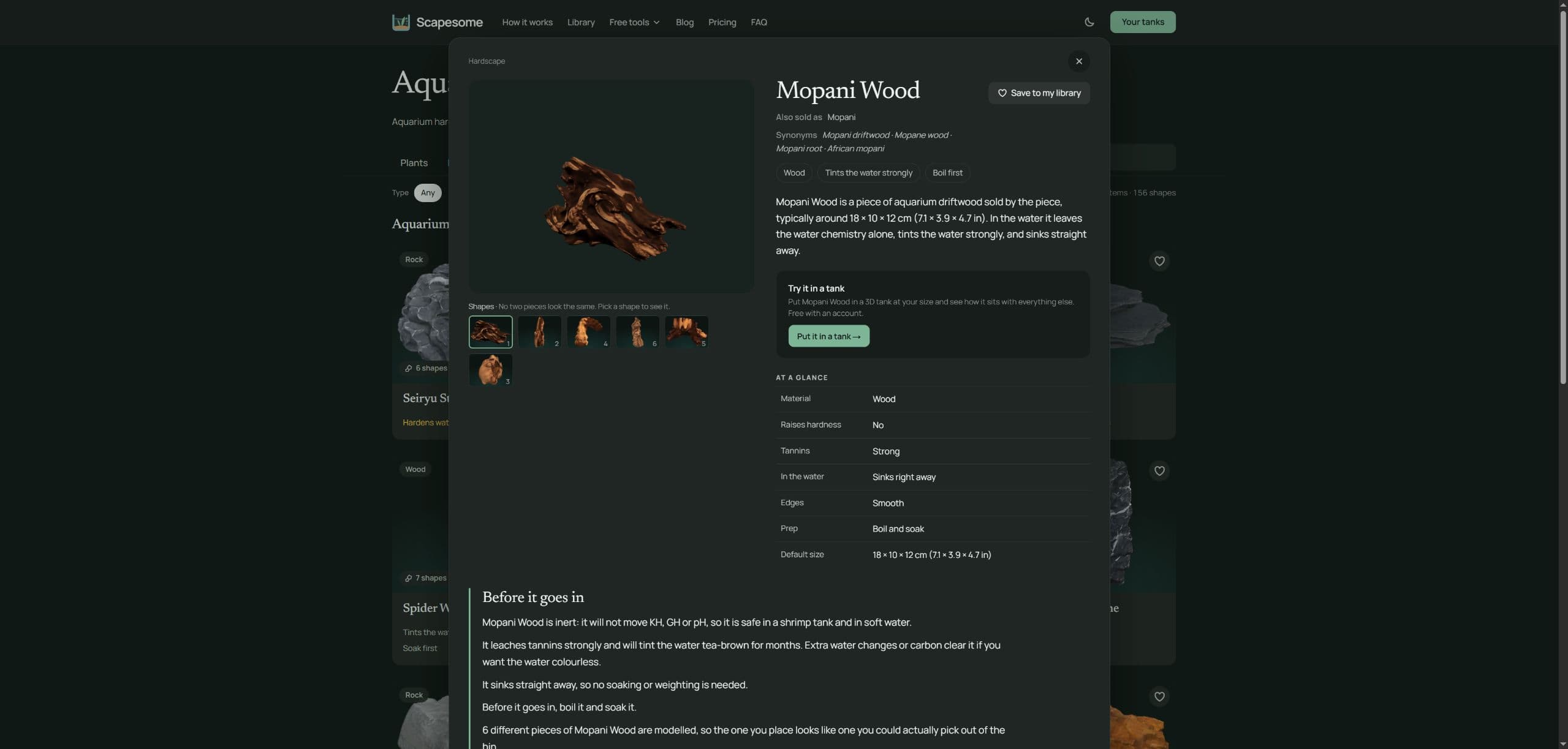
How to choose driftwood that fits your aquarium
Check all three dimensions of a wood piece, its intended orientation and the gaps you need before buying it.
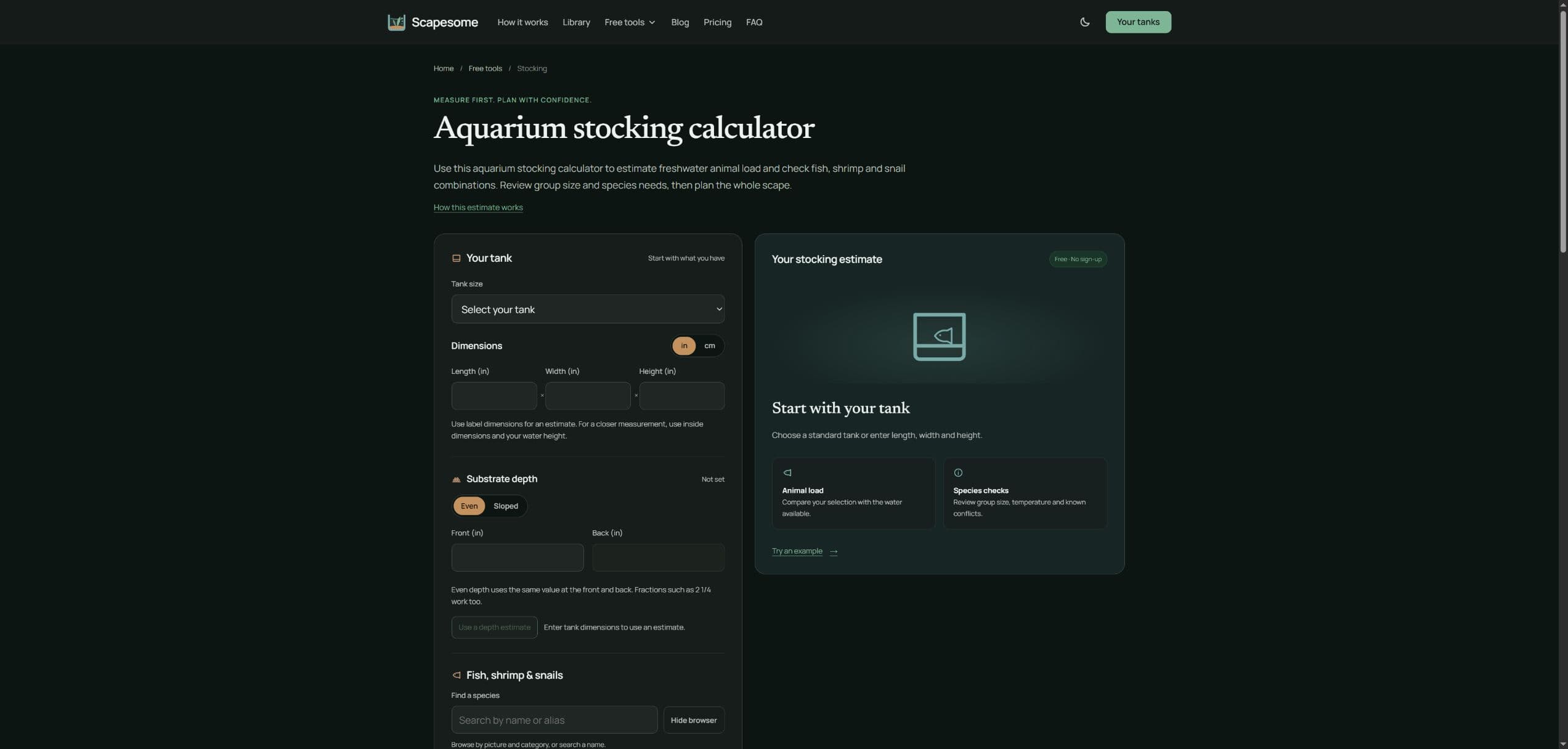
What to check before stocking a planted tank
Build a compatible fish list around adult needs and usable space, then use an estimated load as one further planning check.
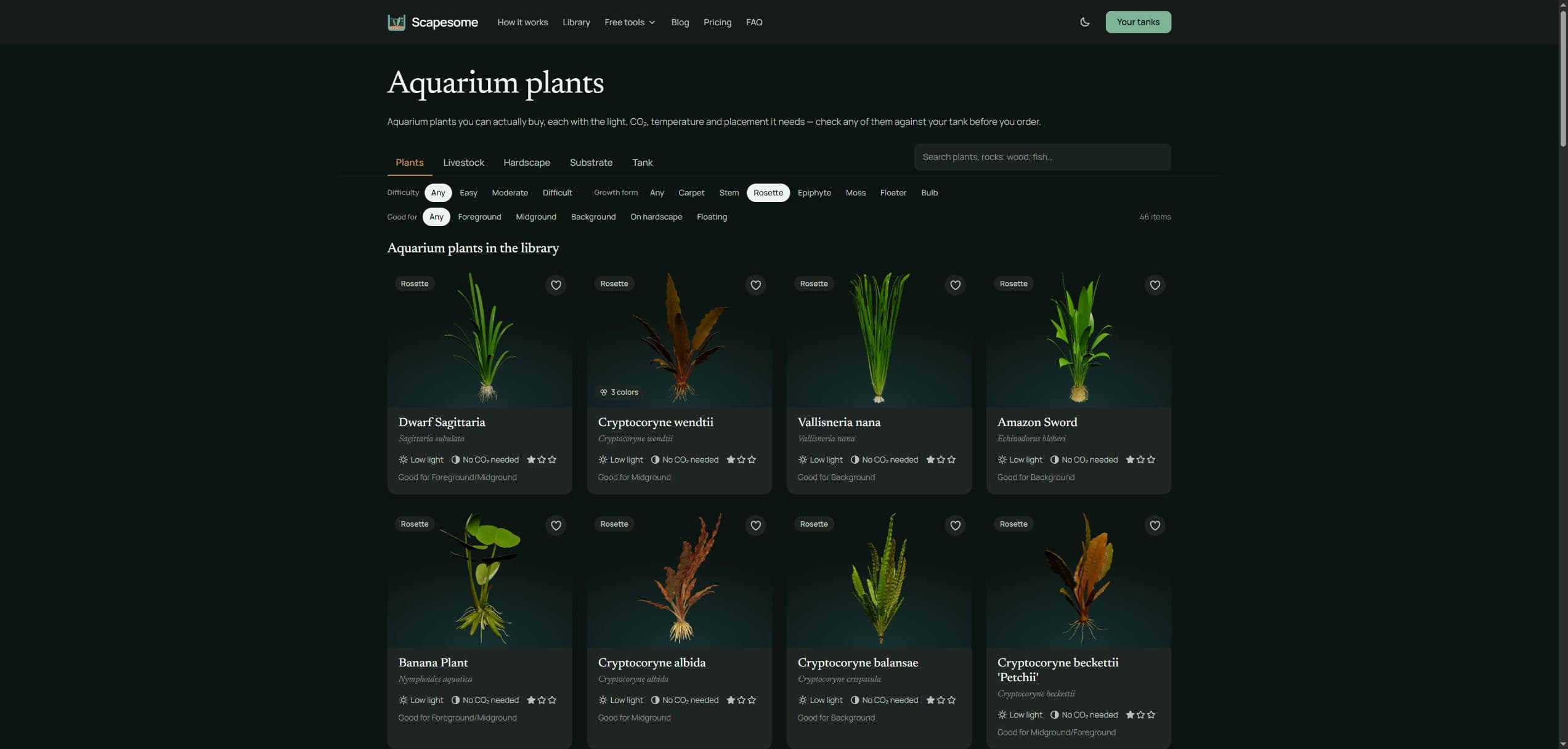
How many aquarium plants should you buy?
Count planting jobs first, then convert them into pots, cups or bunches using the material the seller actually supplies.

Red aquarium plants without CO2: what is realistic?
Set realistic expectations for a red or bronze accent without assuming your leaves will match a promotional photograph.
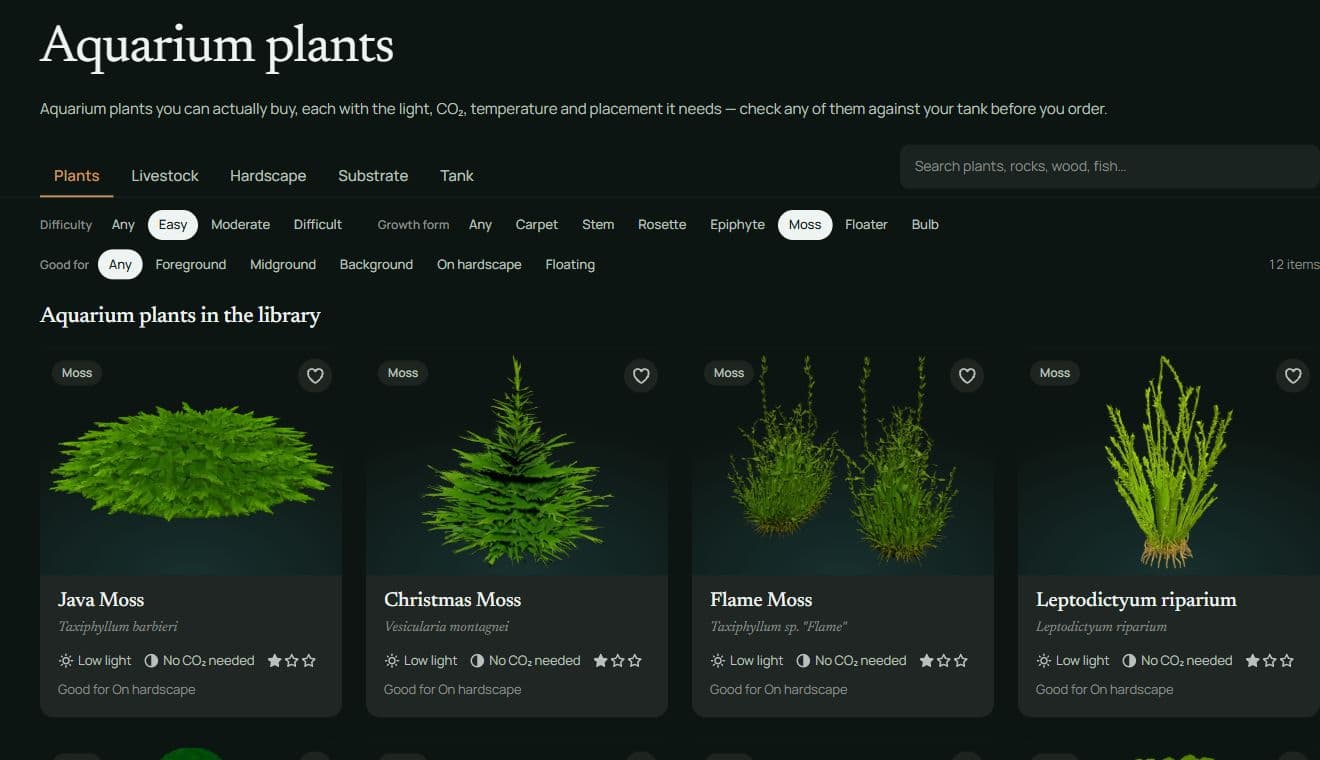
How to attach aquarium moss to wood or rock
A practical way to position, fasten and inspect a small moss patch while leaving room for later trimming.
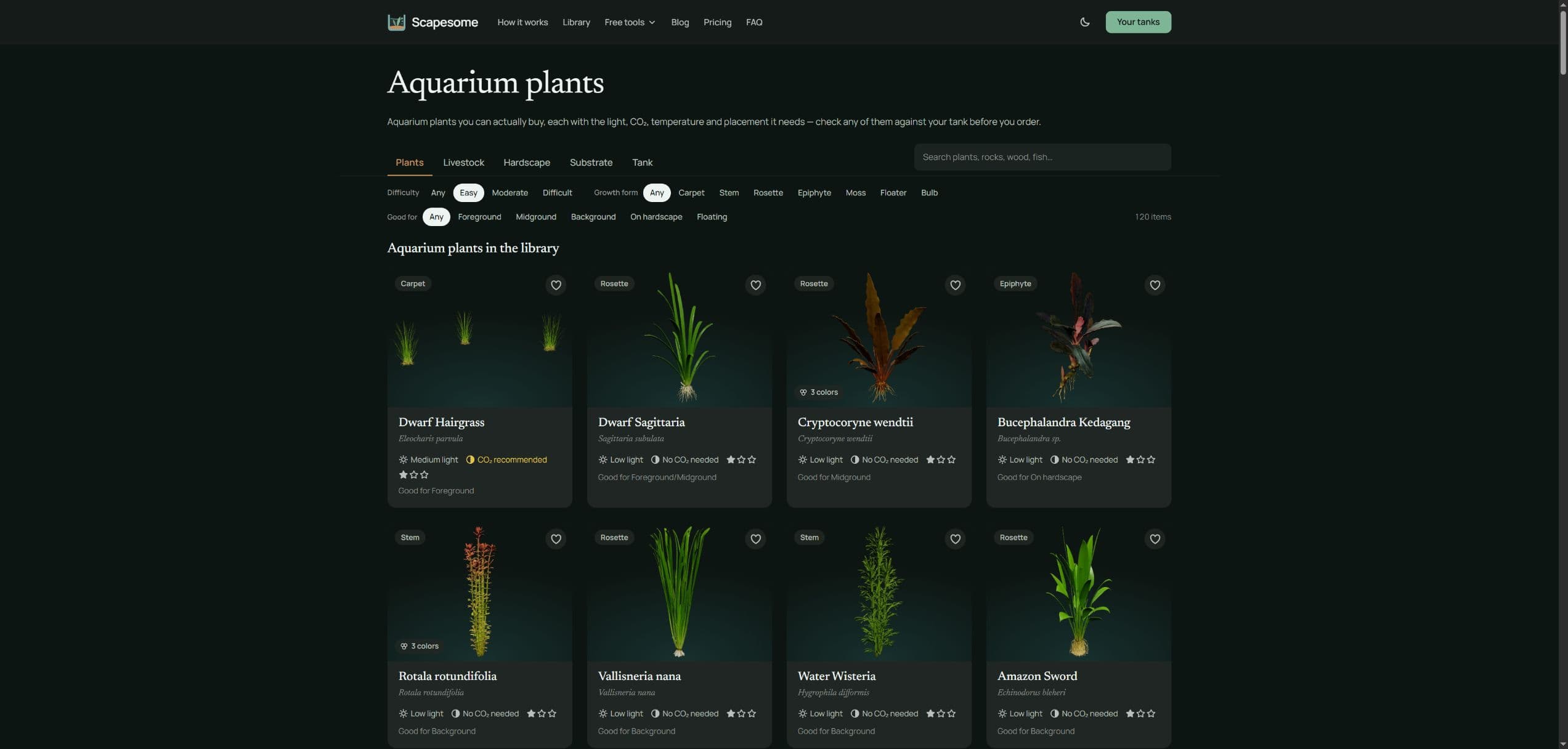
Tissue culture vs potted aquarium plants: which should you buy?
Choose cups or pots by the actual plant material, planting positions and preparation involved, rather than comparing container counts.
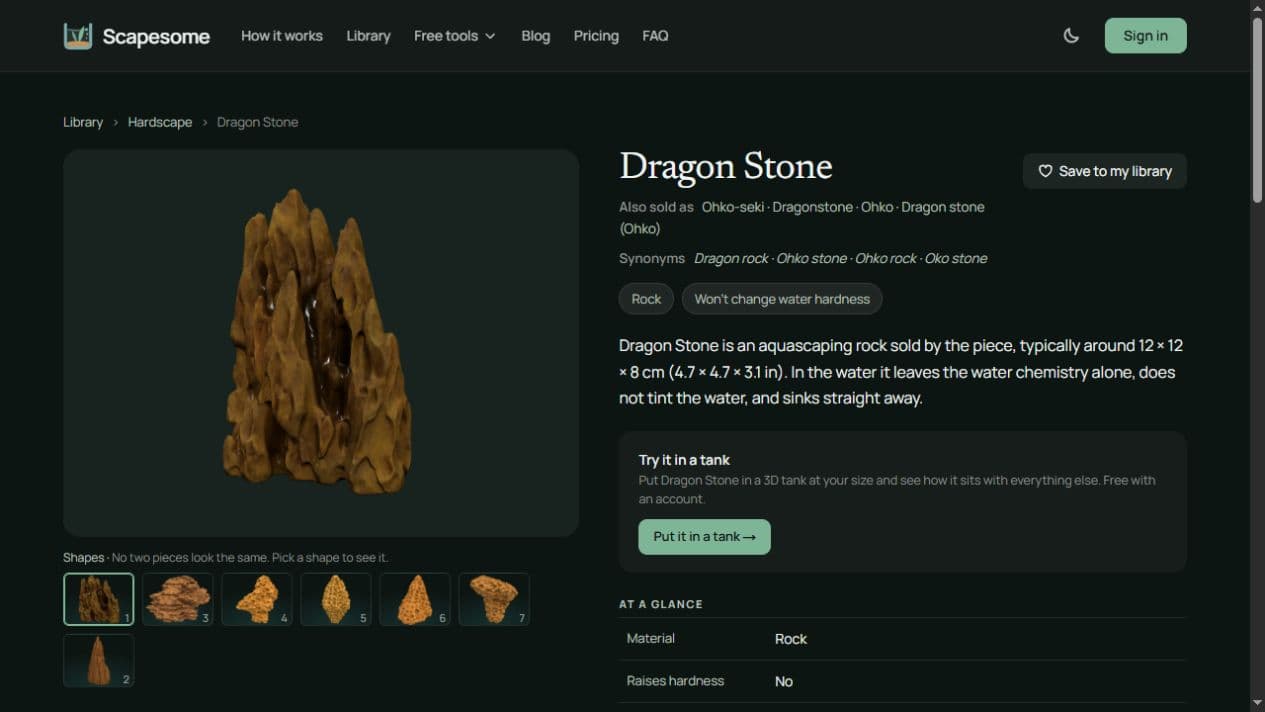
How to check aquarium hardscape before you glue it
Rehearse cleaning, planting and equipment removal before fixing the arrangement in place.

Floating aquarium plants: how much surface should you cover?
Decide where shade belongs and keep the required surface areas open before adding a patch of floating plants.

Which background aquarium plants will fit your tank?
Measure the space above the rear bed, compare plant forms and leave room for the trimming your chosen background will need.
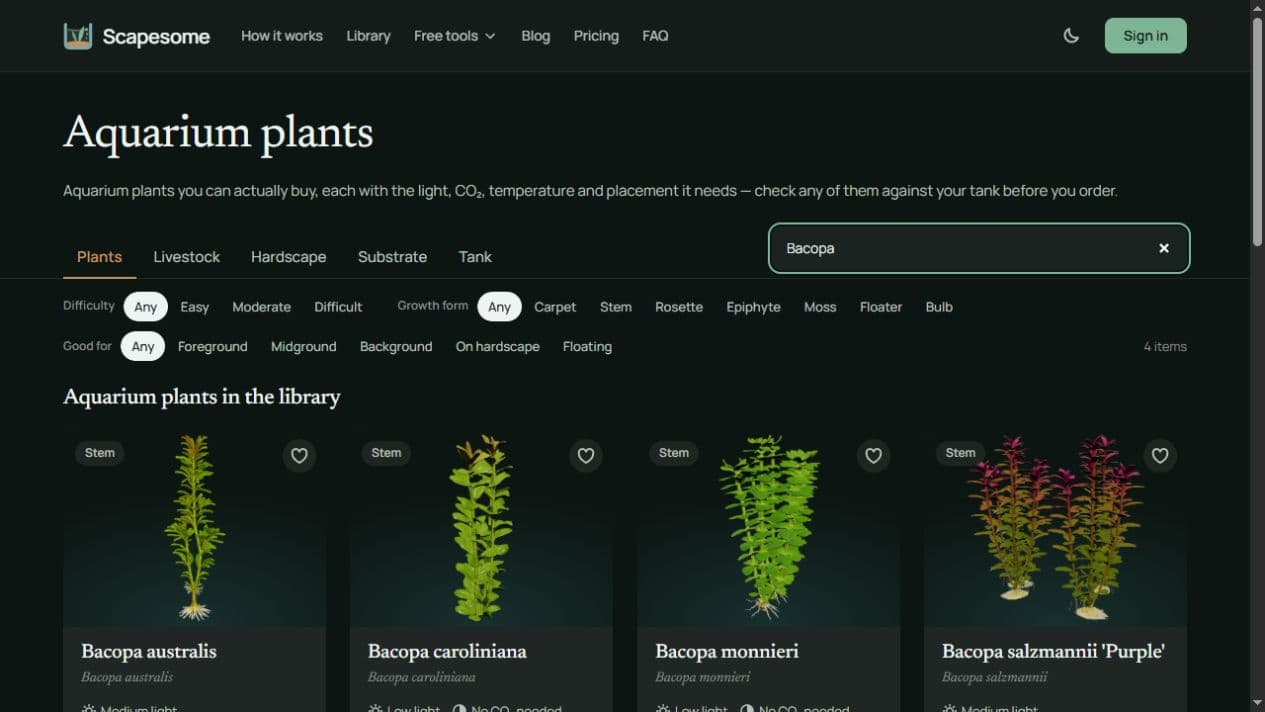
How far apart should you plant aquarium stems?
Work out a starting gap for your particular stems and estimate planting points before converting them into pots to buy.
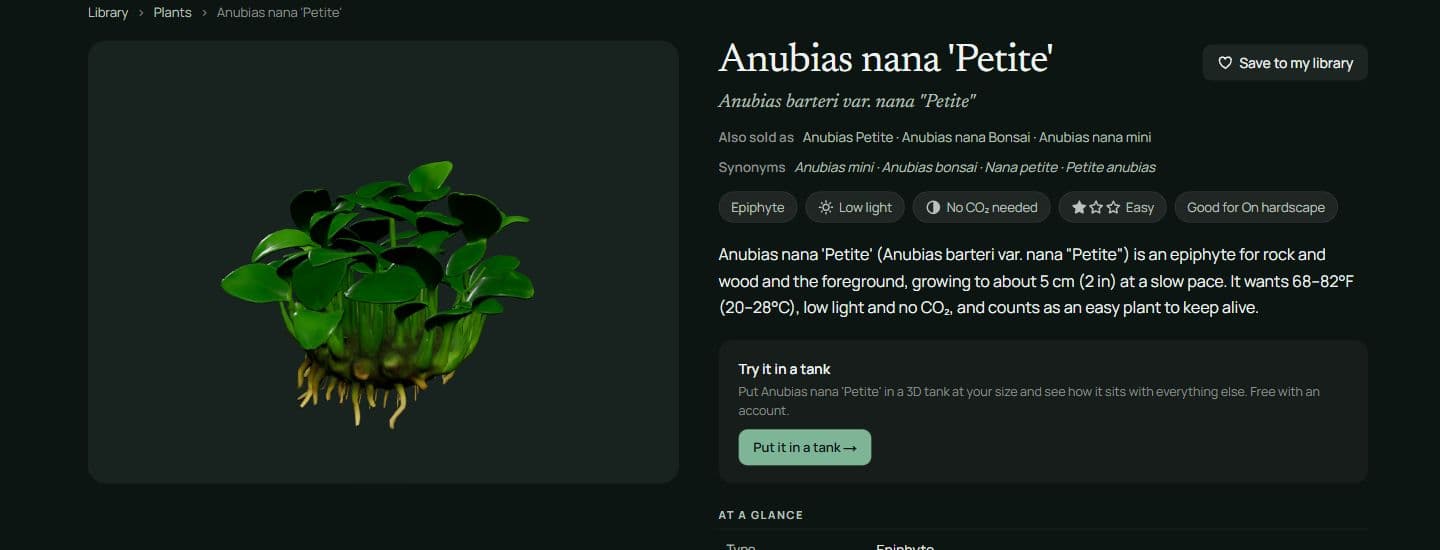
Anubias nana vs Petite: which fits your hardscape?
Choose the leaf scale and attachment position that preserve the rock or branch detail you want to see.
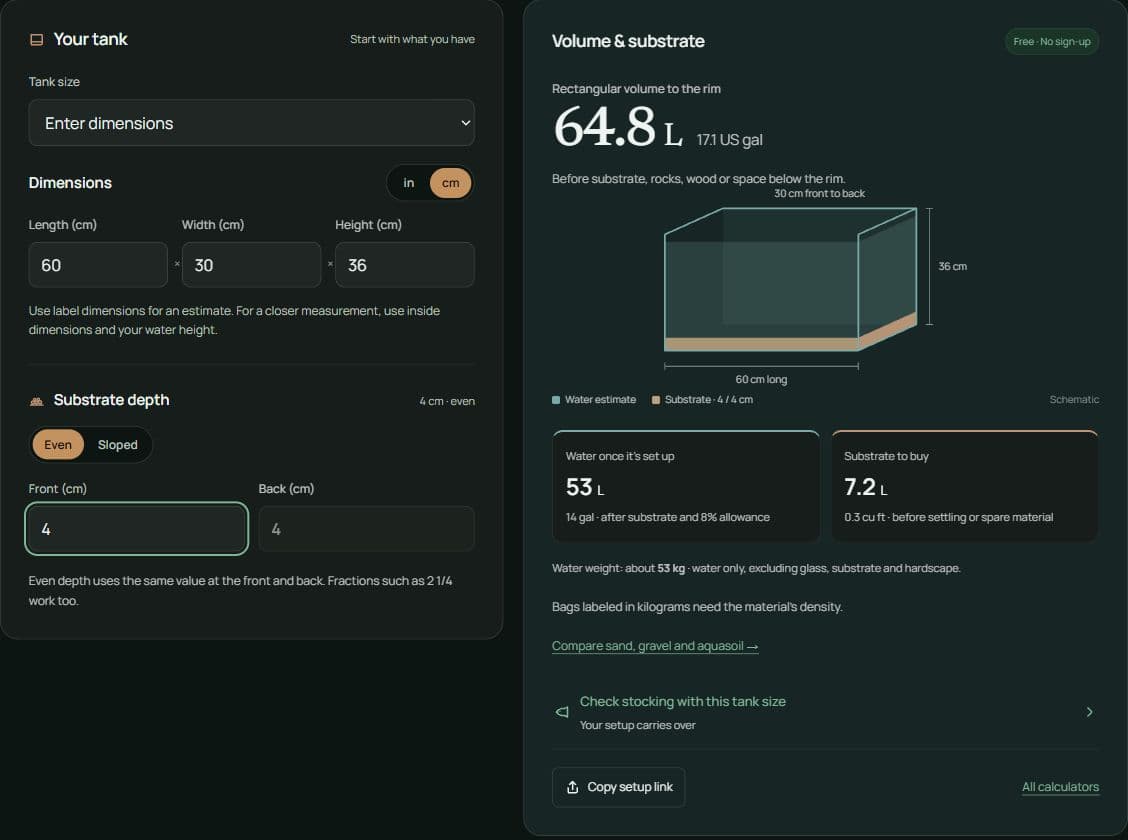
How much water is actually in your aquarium?
Work out which volume figure you need, understand the calculator’s allowance, and record the actual fill once your tank is built.